
Mould & Condensation Ventilation Solutions
Condensation on your windows? Mould returning on walls or ceilings?
Excess indoor humidity and inadequate ventilation can be major contributors. Healthy Homes can assess the ventilation in your property and recommend an appropriate ventilation solution. The first step is understanding what is contributing to the moisture problem.
Request a Ventilation AssessmentVentilation specialists based in Wexford, Ireland — not a mould-cleaning or damp-proofing service.
Are You Seeing These Signs?
- Condensation or water running down windows
- Black mould around window reveals
- Mould on external walls or ceilings
- Recurring bathroom mould
- Musty or stale smells
- Excessive indoor humidity
- Condensation in bedrooms overnight
- Mould returning after cleaning
These signs can have several causes. Black mould and condensation may occur together, but appearance alone does not establish the moisture source. Recurring symptoms should be properly assessed before selecting a solution.
Why Does Condensation Form?
Showering, cooking, drying clothes indoors and breathing all add moisture to indoor air. When warm, humid air reaches a sufficiently cold surface, some of that moisture condenses into water. This can appear as condensation on windows, walls or ceilings.
Inadequate ventilation can allow moisture levels to remain elevated and increase the risk of condensation and mould growth. Heating, surface temperatures, insulation, air movement and how the home is used also matter. Ventilation is one part of the picture, not an explanation for every damp patch.
Is Poor Ventilation Causing the Mould?
Not all mould or damp is caused by inadequate ventilation. Identifying the moisture source is important before deciding what work is needed.
- Condensation / high indoor humidity
- Inadequate ventilation
- Water leaks
- Penetrating damp
- Rising damp
- Thermal bridging / cold surfaces
- Insulation defects
- Building defects
Healthy Homes assesses the property's ventilation requirements. We do not offer structural damp surveys, mould remediation or damp-proofing. If evidence suggests a leak, penetrating or rising damp, an insulation defect or another building issue, an appropriate building professional should assess that cause. Installing ventilation alone does not repair these defects.
How Healthy Homes Can Help
A ventilation strategy starts with the property and the affected rooms, not a product recommendation. Our proposed approach is:
- 01
Assess
Review the property, existing ventilation, wet-room extraction, background air provision and the areas affected by condensation or mould.
- 02
Identify
Consider whether inadequate ventilation or moisture removal appears to be contributing. This is a ventilation assessment, not a diagnosis of every possible structural damp problem.
- 03
Recommend
Recommend an appropriate strategy for the individual property, considering air supply as well as extraction, rather than automatically specifying one product.
- 04
Install & Commission
Where a mechanical system is appropriate, Healthy Homes can design, supply, install and commission as applicable to the selected solution. The agreed quotation defines the scope.
Ventilation Solutions for Condensation & Humidity
The correct condensation ventilation solution depends on the home, its moisture sources and existing air provision. Ventilation for mould-related moisture should address the airflow strategy, not simply add a more powerful fan.
Continuous Mechanical Extract Ventilation (cMEV)
A central system continuously extracts from wet rooms such as bathrooms, kitchens and utility rooms. Appropriate background inlets and transfer paths provide controlled replacement air. Airflows, controls and ductwork need to suit the property.
Demand-Controlled Ventilation (DCV)
Depending on the system design, extraction and air inlets can respond to demand or humidity. The aim is to provide ventilation in response to changing conditions while maintaining the required background provision.
Continuous / Decentralised Extract Fans
Individual continuous extract fans may suit problem wet rooms or an appropriately designed decentralised arrangement. Selection depends on airflow needs, installation access, noise, controls and replacement air; a single room fan is not always a whole-home solution.
Background Ventilation / Air Inlets
Extract systems need air to replace what they remove. Air inlets and transfer paths between rooms must be considered alongside extraction. Installing a powerful fan without suitable air supply is not a complete ventilation strategy.
MVHR / Heat Recovery Ventilation
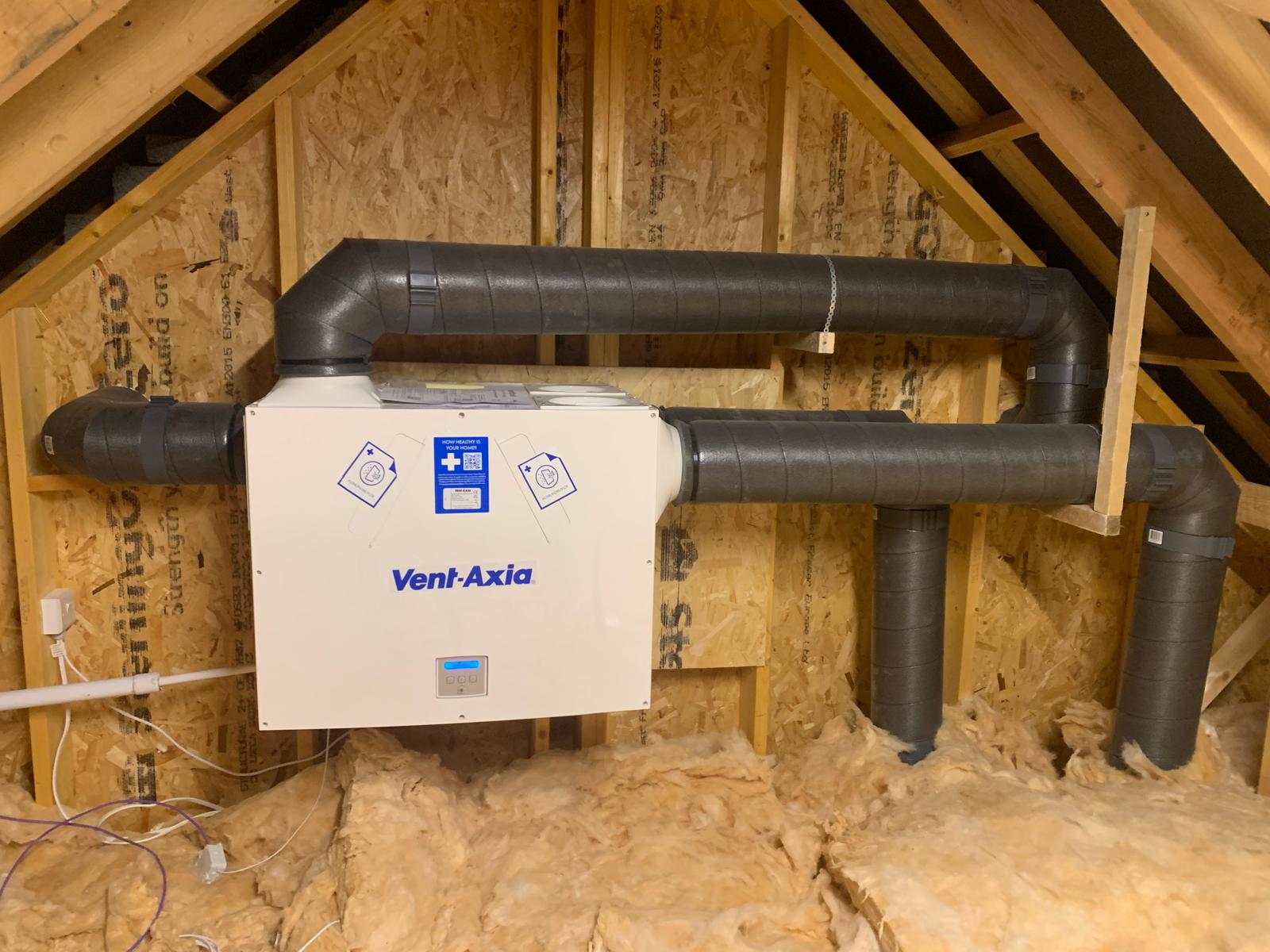
MVHR supplies fresh filtered air and extracts stale air while recovering heat. It can be appropriate for suitable airtight homes, new builds and certain retrofit projects, but is not the automatic answer to every condensation problem. Read about our heat recovery ventilation design and installation service or our explanation of how MVHR works.
Compare Healthy Homes residential ventilation services to explore the different approaches.
Why Do My Windows Have Condensation Every Morning?
Occupants release moisture overnight through breathing. If glass and surrounding surfaces cool and moisture is not removed sufficiently, water may form on the inside of bedroom windows by morning. Heating patterns, room temperature, curtains, air movement and ventilation provision can all influence this.
Replacing windows alone does not necessarily address high humidity in the house or inadequate moisture removal. However, not all window condensation indicates a ventilation defect: condensation on the outside of glass, or between panes, needs to be distinguished from condensation on the room-side surface. Mould around windows also warrants consideration of cold reveals, leaks and other defects.
Bathroom Condensation & Mould
Bathing and showering create short periods of high moisture demand. Appropriate extract provision, boost controls and replacement air can help remove this moisture. Persistent bathroom condensation or mould should also prompt checks for leaks and unusually cold surfaces, rather than assuming the fan is the only issue.
Bedroom Condensation & Mould
Overnight occupancy adds moisture while bedroom surfaces may cool. Restricted background air provision and poor airflow behind furniture can contribute to local moisture conditions. A suitable ventilation strategy may help, but heating, insulation and possible building defects also need consideration.
Why Does Mould Keep Coming Back After Cleaning?
Cleaning removes visible mould but does not necessarily deal with its cause. If excess moisture, condensation or another damp source remains, mould may recur. Addressing the moisture source matters more than repeatedly treating the visible patch.
Healthy Homes focuses on ventilation-related moisture removal, not mould cleaning. Where a leak or building defect is involved, that cause needs appropriate attention alongside any ventilation improvements.
Why Choose Healthy Homes?
Healthy Homes is a residential ventilation specialist based in Wexford, Ireland. We offer different ventilation approaches, with design, supply, installation and commissioning as applicable, rather than recommending one solution for every house.
See our previous ventilation installations and ventilation installation case studies. These show system and ductwork examples, not proof of a guaranteed mould cure.
- Ventilation advice based on the property
- Air supply considered alongside extraction
- Installation scope agreed for the selected solution
Let's Understand Your Ventilation Problem
Tell us your location, the rooms affected, when condensation appears and what ventilation is already installed. We can discuss an appropriate next step and the scope of a ventilation assessment or quotation.
Talk to Healthy Homes About Your Condensation or Ventilation ProblemFrequently Asked Questions
Can poor ventilation cause mould?
Inadequate ventilation can allow indoor moisture to remain elevated, contributing to condensation and conditions in which mould can grow. It is not the only possible cause: leaks, damp, cold surfaces and building defects must also be considered.
Will ventilation stop condensation on windows?
Appropriate ventilation can help reduce indoor moisture and the risk of condensation on the room-side surface of windows. It cannot guarantee condensation-free glass in every condition. Surface temperature, heating, moisture production and other building issues also affect the result.
Why do my bedroom windows have condensation every morning?
Occupants release moisture while sleeping. Overnight, cool glass and limited moisture removal can allow that moisture to condense on the inside of windows. This alone does not prove a ventilation defect; the location of the condensation, heating, surface temperatures and existing ventilation should be considered.
Why does mould keep coming back after I clean it?
Cleaning removes visible mould but does not necessarily remove the moisture source. Where condensation or another damp problem remains, mould may return. Identify and address the underlying cause rather than relying only on repeated cleaning.
What is the best ventilation system for condensation?
There is no single best system for every home. The appropriate strategy depends on the property's layout, airtightness, existing extract and background air provision, moisture sources and installation access. Continuous extract, demand-controlled ventilation or other suitable approaches should be considered following a ventilation assessment.
Will an extractor fan solve condensation?
A correctly selected and installed extractor can help remove moisture from a wet room. It also needs suitable replacement air, a route for air to reach the room and appropriate controls and operation. One fan may not address moisture elsewhere in the home, and it cannot repair a leak or building defect.
Does MVHR help with condensation?
In a suitable property, properly designed and commissioned MVHR continuously extracts moisture from wet rooms and supplies fresh air to habitable rooms. It can help manage ventilation-related moisture, but is not automatically appropriate for every existing home and does not resolve all causes of damp or mould.
Can mould be caused by something other than condensation?
Yes. Moisture from water leaks, penetrating damp, rising damp or other building defects can contribute to mould. Cold surfaces, thermal bridging and insulation defects can also contribute to condensation. Suspected non-ventilation defects need assessment by an appropriate building professional; ventilation alone does not repair them.